

⚡ Quick Answer: If your teeth are still yellow despite good brushing habits, the problem is likely NOT your brushing — it's your oral bacteria balance. Harmful bacteria in an imbalanced oral microbiome produce acids that discolor enamel and cause bad breath. No amount of brushing fixes a bacteria problem.
Transparency note: This article is based on personal experience and evidence-based oral health research. It includes an affiliate link to ProDentim at no extra cost to you.
- Why your dentist might not have explained the real reason
- What harmful bacteria actually do to your teeth
- Why whitening products only give temporary results
- The oral probiotic approach I tried
- My month-by-month experience with ProDentim
- The daily routine that works
- Old approach vs oral probiotic approach
- Frequently asked questions
The Reason Your Dentist Might Not Have Explained
Here's what I eventually learned, and what changed everything for me.
Your mouth is not supposed to be sterile. It contains 700+ species of bacteria, living in a complex ecosystem called your oral microbiome. When this ecosystem is healthy — with beneficial bacteria dominating — your teeth stay cleaner, your breath stays fresher, and your gums stay healthier.
The problem is that most modern oral hygiene habits destroy this ecosystem.
Antibacterial mouthwash (Listerine and most commercial brands) doesn't just kill harmful bacteria. It kills everything — the good bacteria along with the bad. When you rinse with it daily, you're essentially creating a vacant ecosystem in your mouth. And what moves in to fill that vacuum? Usually the hardiest, most aggressive strains of harmful bacteria.
This is why so many people brush twice a day, use mouthwash religiously, and still have yellow teeth, persistent bad breath, or bleeding gums.
They're treating the symptom (bacteria) while destroying the defense system (beneficial bacteria).
What Harmful Bacteria Actually Do to Your Teeth
Understanding this helped me stop blaming myself for "not brushing properly."
Streptococcus mutans is the primary cavity-causing bacterium. It metabolizes sugars and produces lactic acid as a byproduct. This acid attacks your tooth enamel — the hard outer layer. Over time, acid attacks cause enamel to weaken, become porous, and pick up staining from foods and drinks far more easily.
So the yellowing you're seeing? It's often staining getting into enamel that harmful bacteria have made porous and vulnerable — not just surface discoloration.
No whitening toothpaste can fix enamel that's being continuously damaged by an imbalanced bacterial environment.
Meanwhile, Porphyromonas gingivalis and Treponema denticola — two other harmful bacteria — are linked to gum disease and persistent bad breath. They produce sulfur compounds (VSCs) that cause the unpleasant smell no amount of mouthwash permanently fixes.
Why Whitening Products Give You Temporary Results
I tried three different whitening toothpastes over 18 months. Every one of them gave me marginal, short-lived results.
Now I understand why.
Whitening toothpastes use mild abrasives or low concentrations of hydrogen peroxide to lighten surface stains. They do this reasonably well. But the moment you eat, drink coffee, or simply let time pass — if your oral bacteria balance is off, the harmful bacteria resume their acid production and the staining resumes.
It's like mopping the floor while the pipe is still leaking.
What you actually need is to fix the pipe — meaning, restore the balance of bacteria in your mouth.
The Oral Probiotic Approach — What I Tried
About 14 months ago, I started reading about oral probiotics. The idea is the opposite of antibacterial mouthwash: instead of killing bacteria, you introduce beneficial bacteria — specific strains that have been clinically shown to colonize oral tissue and crowd out the harmful strains.
After some research, I decided to try ProDentim.
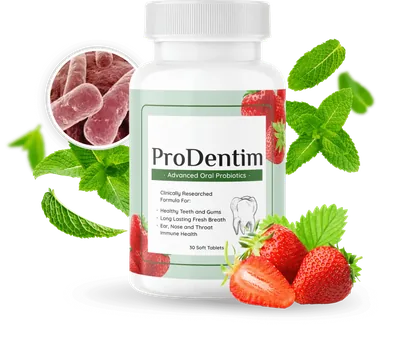
ProDentim is a chewable oral probiotic tablet containing 3.5 billion CFU of bacterial strains specifically studied for oral health. The main strains — Lactobacillus Paracasei, Lactobacillus Reuteri, and B.lactis BL-04® — each have clinical research behind their effects on gum health, bad breath, and oral bacterial balance.
It also contains Inulin (a prebiotic that feeds the good bacteria), Malic Acid from strawberries (a natural whitening agent), and Tricalcium Phosphate for enamel support.
I chew one tablet after brushing at night, as directed.
My Experience With ProDentim — Month by Month
I want to be honest here. This is not a magic overnight transformation story.
Month 1: Subtle
The first thing I noticed — around week 3 — was that my breath felt fresher in the mornings. My husband noticed before I brought it up. I hadn't told him I was trying it. He said, "Your breath is better." Not romantic, but useful data.
No dramatic whitening. Teeth felt clean — but they'd always felt clean because I brush properly.
Month 2: Real Changes
This is when I noticed something at my dental cleaning. My hygienist — who I've been going to for years — asked if I'd changed anything. She said my gums looked healthier and there was less tartar buildup than usual.
She didn't know I'd been taking ProDentim. That felt like an honest third-party confirmation.
My teeth also looked slightly brighter — though I honestly couldn't tell if it was the Malic Acid or just my imagination. I asked my sister. She said: "Haan, thoda better dikh raha hai." (Yes, they look a bit better.)
Month 3: Where I Am Now
The bad breath issue that used to bother me — especially mid-morning after chai — is essentially gone. It comes back if I eat something strong, like garlic or onion, but the baseline between-meal freshness is genuinely different.
Teeth: lighter than they were 3 months ago. Not celebrity-white — let me be real — but noticeably less yellow in photos. I'm no longer covering my mouth in group photos. That alone feels like progress.
What ProDentim Does NOT Do
I want to be honest about limitations:
- It does not whiten teeth dramatically. If you want quick, dramatic whitening, professional whitening or bleaching trays will do that faster. ProDentim works at the root cause — it's a slow, foundational improvement.
- It is not a substitute for brushing and flossing. It works alongside good oral hygiene, not instead of it.
- Results are gradual. If you expect results in 2 weeks, you'll be disappointed. Give it 60–90 days.
- It has a mild aftertaste — slightly chalky for about 15 minutes after chewing. Not terrible, but worth mentioning.
The Daily Routine That Works
Here's exactly what I do now — this combination gives the best results based on 3 months of trial and error:
- Morning: Brush with a fluoride toothpaste (not antibacterial). Skip the antibacterial mouthwash — use a fluoride rinse or plain water instead.
- After lunch: Rinse with plain water. Drink water throughout the day (keeps mouth hydrated and reduces bacteria-friendly acidity).
- Night: Brush again. Then chew one ProDentim tablet — let it dissolve slowly in your mouth. Don't eat or drink after.
The key change: I stopped using antibacterial mouthwash entirely. This was the hardest habit to break mentally, but it made a clear difference within 3–4 weeks.
Quick Comparison: Old Approach vs. Oral Probiotic Approach
| Traditional Approach | Oral Probiotic Approach | |
|---|---|---|
| Goal | Kill bacteria | Balance bacteria |
| Mouthwash | Antibacterial (kills all) | Fluoride rinse or none |
| Whitening | Surface-only, temporary | Gradual, more durable |
| Breath fix | Masks smell | Reduces VSC-producing bacteria |
| Gum health | Depends | Supported by Lactobacillus strains |
| Timeline | Instant (temporary) | 60–90 days (more lasting) |
Is ProDentim Worth It?
One bottle of ProDentim is $69 for a 30-day supply. That's not cheap. But consider: I was spending $15–20/month on whitening toothpastes, mouthwash, and dental treatments combined, with mediocre results at best. With ProDentim, I get stronger results at a comparable cost — plus the oral microbiome approach actually fixes the root issue instead of just masking symptoms.
The 60-day money-back guarantee also means you can genuinely try it for 2 months risk-free.
If you want to try it: ProDentim is available on the official website here. I'd recommend starting with the 3-bottle pack — that's the 90-day supply that really lets the oral microbiome shift.
Disclosure: I earn a small commission if you purchase through my link, at no extra cost to you. I started using ProDentim before I became an affiliate — my experience is genuine.
What to Do If You Can't Afford ProDentim Right Now
Honestly? A few free things also help:
- Stop antibacterial mouthwash. Seriously. Just stop. Use plain water or a fluoride rinse.
- Oil pulling with coconut oil for 10 minutes in the morning can reduce harmful bacteria counts moderately. Not as effective as targeted probiotics but helpful.
- Eat more fermented foods — dahi (yogurt), kanji, fermented pickles all introduce beneficial bacteria naturally.
- Drink more water. Mouth dryness is a major factor in bacterial overgrowth.
These won't fix the problem fully — but they'll move you in the right direction.
People Also Ask — FAQ
Frequently Asked Questions
Published: May 2026 | Author: Sarah Caldwell, M.S.
Note: Results vary. Please consult your dentist before changing your oral care routine, especially if you have active gum disease or cavities.