

- The hidden ecosystem inside your mouth
- When your gums become a gateway to your bloodstream
- Why antiseptic mouthwash may be making things worse
- The probiotic science your dentist probably doesn't know
- Why delivery format is the variable no one talks about
- ProDentim: The oral probiotic that leads ClickBank's health category
- A practical protocol: How to incorporate oral probiotics effectively
- FAQ
The Hidden Ecosystem Inside Your Mouth
Somewhere between your last dentist appointment and this morning's toothbrush, your mouth has been running a biological experiment you never authorized. A private ecosystem of more than 700 bacterial species — collectively called the oral microbiome — is conducting a constant, silent negotiation between inflammation and immunity, between health and disease. And for most Americans over 50, that negotiation is losing badly.
This isn't a hygiene lecture. You brush. You floss. You swish. And yet gum disease affects nearly half of all adults over 30 in the United States, and that number climbs sharply past age 65, according to the National Institute of Dental and Craniofacial Research. The problem isn't your effort. The problem is your strategy — and most conventional dental care is fighting the wrong battle entirely.
The real question isn't how well you remove bacteria. It's whether the bacteria you have left are the right ones.
Think of your oral microbiome the way you think of a rainforest. When the right species are present in the right proportions, the ecosystem is self-regulating and resilient. When one group is wiped out — by antibiotics, antiseptic mouthwash, a sugar-heavy diet, or simply the passage of time — opportunistic pathogens rush in to fill the void. The result is dysbiosis: a state of microbial imbalance that dental science is only now beginning to understand in full systemic context.
A landmark 2024 review published in Microorganisms (PubMed Central) describes how oral dysbiosis doesn't stay in the mouth. It triggers a chain of consequences including dental caries, periodontitis, chronic halitosis, and — crucially — systemic conditions involving the cardiovascular system, blood sugar regulation, the gastrointestinal tract, and neurological function.
When Your Gums Become a Gateway to Your Bloodstream
Here is the mechanism your dentist probably hasn't explained in full: inflamed, diseased gum tissue is not an intact barrier. It is, in clinical terms, a wound — one that opens every time you eat, swallow, or brush. Through that wound, periodontal pathogens like Porphyromonas gingivalis and Fusobacterium nucleatum gain direct access to the circulatory system.
Researchers at Harvard's School of Dental Medicine have documented this pathway in detail. According to Harvard Health, people with periodontal disease have roughly twice the risk of a heart attack compared to those with healthy gums — and growing evidence suggests this isn't merely correlational. Oral bacteria have been physically identified within atherosclerotic plaques in coronary arteries, far removed from the mouth.
"Your mouth is a gateway to the rest of your body, so it's not surprising that your oral health can affect your overall health and vice versa. In both gum disease and heart disease, we find bacteria in places where they're not supposed to be."
A 2025 paper published in Diagnostics, indexed on PubMed Central, describes what researchers now call the "oral-gut-systemic axis" — a bidirectional highway through which oral pathogens influence gut microbiota composition, systemic immune response, and disease states including Type 2 diabetes, rheumatoid arthritis, inflammatory bowel disease, and early-stage neurodegeneration.
What makes this especially relevant for adults in the 50–75 age range is the compounding effect of time. Decades of processed food consumption, multiple antibiotic courses, and the natural decline in saliva production that accompanies aging all progressively deplete the beneficial bacteria populations that keep pathogenic species in check. By the time most people notice symptoms — bleeding gums, persistent bad breath, increased tooth sensitivity — the dysbiosis has been brewing silently for years.
Why Antiseptic Mouthwash May Be Making Things Worse
It sounds counterintuitive, but one of the most common tools in the conventional dental toolkit may be actively contributing to oral dysbiosis. Chlorhexidine-based mouthwashes and alcohol-containing rinses are spectacularly effective at killing bacteria — the problem is they cannot distinguish between the pathogens you want gone and the beneficial species you desperately need to keep.
- Persistent bad breath that returns within hours of brushing
- Gums that bleed during flossing or at the touch of a toothbrush
- Increased tooth sensitivity to temperature or sweet foods
- Receding gumline or pockets forming around teeth
- Frequent mouth sores or white patches on the tongue or cheeks
- A coated, whitish tongue despite regular cleaning
- Dry mouth or reduced saliva production
Research published in the journal Microorganisms describes how the indiscriminate destruction of oral bacteria disrupts mucosal immunity and resistance to pathogen colonization — essentially creating a vacuum that aggressive anaerobic bacteria are well-positioned to fill once the antiseptic effect wears off. The clinical implication is that many people who rely heavily on antiseptic rinses may be locked in a cycle: rinse, brief relief, rapid recolonization by pathogens.
The emerging consensus in oral microbiome research points toward a fundamentally different strategy: rather than attempting to sterilize the mouth, the goal should be actively repopulating it with beneficial bacterial strains that can outcompete pathogens, produce natural antimicrobials, and restore the ecological balance that makes the oral environment self-defending.
This is the science behind the growing clinical interest in oral probiotics.
The Probiotic Science Your Dentist Probably Doesn't Know Yet
Oral probiotic therapy sits at the intersection of two decades of gut microbiome research and a fast-emerging field of oral ecology science. The core insight is elegant: if you can seed the mouth with bacterial strains that produce their own antimicrobial compounds, adhere strongly to oral surfaces, and stimulate a balanced immune response, you can restore the competitive equilibrium that keeps pathogens in check — without the collateral damage of broad-spectrum antiseptics.
The most extensively studied oral probiotic strain is Lactobacillus reuteri, and the research is compelling. A comprehensive 2024 review in Microorganisms (PubMed Central) summarized the evidence: L. reuteri produces reuterin and reutericyclin, two natural antimicrobial compounds effective against a broad spectrum of oral pathogens, including the primary drivers of both cavities (Streptococcus mutans) and gum disease (Porphyromonas gingivalis). It adheres tenaciously to oral surfaces. It modulates local inflammatory signaling — specifically reducing the pro-inflammatory cytokines IL-1β, IL-6, and TNF-α that drive periodontal tissue destruction.
A systematic review covering studies from 2012 to 2022 found that L. reuteri supplementation, when used as an adjunct to standard dental care, produced measurable improvements in clinical markers of periodontitis across the majority of trials reviewed. Separately, meta-analyses have confirmed that Lactobacillus-based probiotic supplementation significantly reduces oral malodor — the kind of persistent bad breath that doesn't respond to conventional oral hygiene.
Why Delivery Format Is the Variable No One Talks About
Here is a detail that separates genuinely effective oral probiotic supplementation from the crowded shelf of gut-focused probiotic capsules: delivery mechanism is everything.
A capsule swallowed whole is optimized to survive stomach acid and colonize the small intestine. It is, by design, engineered to pass through the mouth as quickly as possible. This is the exact opposite of what you need for oral microbiome support. Beneficial bacterial strains need extended contact time with gum tissue, the tongue, the palate, and tooth surfaces to compete for colonization sites and begin establishing themselves in the oral ecosystem.
The clinical research on oral probiotics consistently uses lozenges, chewable tablets, or slowly dissolving formats — not capsules. The dissolving tablet or lozenge format maximizes dwell time in the oral cavity, giving probiotic strains the best chance of colonizing the mucosal surfaces and outcompeting pathogenic bacteria for adhesion sites.
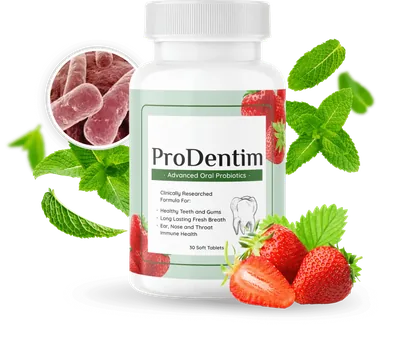
Unlike swallowable capsules, ProDentim's slow-dissolve format ensures probiotic strains remain in direct contact with gums and teeth during colonization — the delivery method used in peer-reviewed clinical research.
ProDentim: The Oral Probiotic That Leads ClickBank's Health Category
Among the oral probiotic supplements now available, ProDentim has emerged as the top-selling product in ClickBank's dietary supplement category for multiple consecutive months in 2025–2026, driven by its combination of probiotic strain selection, its dissolving lozenge delivery format, and the growing body of independent consumer reporting on outcomes including fresher breath, reduced gum sensitivity, and improved dental checkup results.
ProDentim's formula centers on 3.5 billion CFU of five probiotic strains — including Lactobacillus reuteri, Lactobacillus paracasei, and Bifidobacterium lactis — combined with supporting botanicals including malic acid (for natural surface stain reduction) and inulin (a prebiotic fiber that supports beneficial bacterial populations). The product is manufactured in a GMP-certified, FDA-registered facility in the United States, and is formulated without artificial additives, stimulants, or habit-forming compounds.
For the 45–75 demographic specifically, the case for oral probiotic supplementation is stronger than at any prior point in their lives. Saliva production — nature's primary oral antimicrobial and buffering system — declines measurably with age and is further reduced by dozens of commonly prescribed medications including antihistamines, antihypertensives, diuretics, and antidepressants. Reduced saliva means reduced natural protection. Repopulating the oral microbiome with beneficial strains is one of the most practical evidence-aligned strategies available for maintaining both oral and systemic health through the second half of life.
ProDentim comes with a full 60-day money-back guarantee. Order the 3- or 6-bottle bundle for the best value and free shipping.
A Practical Protocol: How to Incorporate Oral Probiotics Effectively
The evidence suggests a few key principles for maximizing the impact of oral probiotic supplementation. First, timing matters. Taking an oral probiotic immediately after brushing and rinsing — when the mouth is most free of competing bacteria — gives beneficial strains the best opportunity for colonization. Second, consistency matters more than dose. Daily supplementation over weeks and months produces the kind of stable microbiome shifts that clinical trials document; sporadic use produces minimal lasting change.
Third, the protocol should complement rather than conflict with conventional dental hygiene. Oral probiotics are not a replacement for brushing, flossing, or professional cleaning — they are an addition to that foundation, providing a layer of biological defense that physical hygiene alone cannot supply. And fourth, dietary support amplifies results. Reducing refined sugar and processed carbohydrate intake starves the pathogenic species that compete with your probiotic supplementation; including fermented foods like plain yogurt, kefir, and sauerkraut provides additional probiotic reinforcement from dietary sources.
Gum disease markers: Multiple systematic reviews show L. reuteri lozenges used alongside standard dental care significantly improve pocket depth and bleeding — two primary clinical markers of periodontitis.
Bad breath: A meta-analysis found Lactobacillus supplementation significantly reduced organoleptic halitosis scores.
Plaque reduction: NIH-referenced data indicates oral probiotics may reduce plaque buildup by up to 20% when used consistently.
Systemic links: The oral-gut-systemic axis is established in the literature; direct causation for cardiovascular risk reduction via oral probiotics specifically remains an active area of research.
Frequently Asked Questions
The oral microbiome is the complex ecosystem of over 700 bacterial species living in your mouth. After 50, declining saliva production, years of antibiotic use, and processed food consumption often tip this ecosystem into dysbiosis — an imbalance that feeds gum disease, chronic bad breath, and systemic inflammation now linked to heart disease, diabetes, and cognitive decline.
Yes. Multiple peer-reviewed studies — including a systematic review published in the journal Microorganisms — show Lactobacillus reuteri supplementation significantly improves clinical markers of periodontitis, including pocket depth and bleeding on probing. The probiotic works by producing reuterin, a broad-spectrum antimicrobial compound that crowds out pathogenic bacteria like Porphyromonas gingivalis.
Gut probiotics are formulated to survive stomach acid and colonize the intestines. Oral probiotics are designed for extended contact with teeth and gum tissue. They must be dissolved in the mouth — not swallowed — to deliver live beneficial bacteria directly where the oral microbiome lives. Delivery format matters enormously: chewable lozenges or dissolving tablets have superior colonization rates compared to capsules.
ProDentim's formula uses well-characterized probiotic strains including Lactobacillus reuteri and Lactobacillus paracasei, studied in clinical trials lasting up to 12 weeks with no reported adverse events. The product is manufactured in an FDA-registered, GMP-certified facility in the USA. As with any supplement, consult your healthcare provider before beginning, particularly if you are immunocompromised or on prescription medications.
Most clinical studies observe measurable improvements in gum inflammation, plaque reduction, and breath odor within 4–8 weeks of consistent daily use. Microbiome rebalancing is gradual — the oral ecosystem that took years to dysregulate requires consistent probiotic repopulation over several months for lasting change.
According to Harvard Health, people with gum disease have approximately two to three times the risk of a serious cardiovascular event compared to those with healthy gums. Researchers believe bacteria from infected gums can enter the bloodstream, triggering systemic inflammation that contributes to arterial plaque and endothelial dysfunction. A 2025 paper in Diagnostics (indexed on PubMed) confirmed periodontal disease is associated with atherosclerosis, diabetes, and neurodegenerative disease via the oral-gut-systemic axis.
Give Your Oral Microbiome What It's Been Missing
ProDentim combines 3.5 billion CFU of five clinically studied probiotic strains in a once-daily dissolving lozenge. No harsh chemicals. No artificial ingredients. Just the beneficial bacteria your mouth was designed to have.
Visit ProDentim's Official Website →Affiliate link. Educational content only. Not medical advice. Individual outcomes vary.