
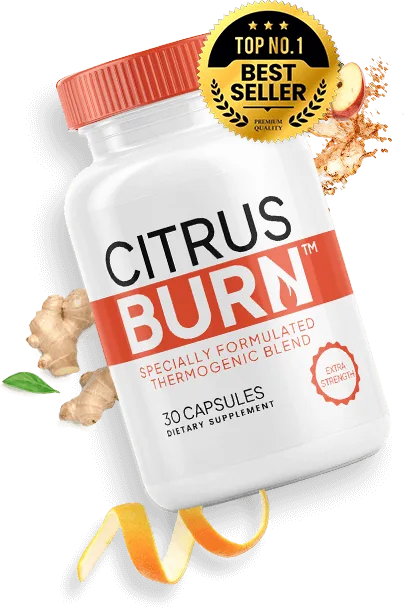

The CitrusBurn Formula: What You're Getting
CitrusBurn contains a 510mg proprietary blend of seven plant-derived active ingredients plus 100mcg of chromium picolinate. The formula targets four distinct metabolic systems simultaneously, a more sophisticated approach than most single-mechanism thermogenic products.
The four systems addressed are: (1) thermogenesis, direct heat production and calorie burn; (2) fat oxidation, the process of breaking down stored fat for fuel; (3) insulin and glucose signaling, how the body handles blood sugar and fat-storage decisions; and (4) hormonal and energy balance, particularly relevant for women navigating age-related hormonal shifts.
CitrusBurn uses a proprietary blend, meaning exact per-ingredient doses are not disclosed on the label. This is common in the supplement industry and not necessarily a red flag, but it means we cannot confirm whether each ingredient is present at clinically studied doses. The overall blend size of 510mg is reasonable for a seven-ingredient formula.
1. Seville Orange Peel: The Star Ingredient
Seville Orange Peel Extract (Citrus aurantium, standardized for p-synephrine)
Seville orange peel (bitter orange) is the cornerstone of the CitrusBurn formula and its most clinically studied active. The key compound is p-synephrine, an alkaloid that acts on adrenergic signaling involved in fat mobilization and energy expenditure.
p-Synephrine appears to bind preferentially to beta-3 adrenergic receptors, which are tied to thermogenesis in adipose tissue, while showing lower activity at receptor sites associated with the cardiovascular side effects seen in harsher stimulant formulas.
Human research has reported measurable effects on resting metabolic rate and fat oxidation, commonly in ranges around 50-100mg of p-synephrine in controlled settings. A 2011 review in phytotherapy literature described p-synephrine as a promising and generally safe fat-burning compound when used appropriately.
p-Synephrine activates beta-3 receptors on fat cells, which triggers lipolysis (fat breakdown), releases fatty acids into circulation, and increases calorie use from stored fat.
Evidence Quality: High
2. Ceremonial Green Tea: The Fat Oxidation Amplifier
Ceremonial Green Tea Extract (Camellia sinensis, standardized for EGCG)
Green tea extract, especially EGCG, is one of the most researched metabolic ingredients in nutrition science. Dozens of clinical studies have examined effects on fat oxidation, calorie expenditure, and body-composition outcomes.
EGCG is believed to inhibit COMT (catechol-O-methyltransferase), an enzyme that helps break down norepinephrine. By slowing that process, green tea may prolong the fat-burning signal and extend thermogenic activity.
Meta-analytic findings have generally shown small but statistically meaningful improvements in weight-related markers over time. The effect is usually modest per dose, but more relevant with consistent daily use.
EGCG helps maintain norepinephrine signaling, supports thermogenesis and fat oxidation, and contributes antioxidant support relevant to metabolic efficiency.
Evidence Quality: Very High
3. Spanish Red Apple Vinegar: The Glucose Stabilizer
Spanish Red Apple Vinegar (acetic acid concentrate)
Apple vinegar's role in CitrusBurn is less about direct thermogenesis and more about metabolic control. Repeated glucose spikes and crashes can push fat-storage signaling and intensify cravings, especially in midlife populations.
The primary active, acetic acid, has been studied for reducing post-meal glycemic response and improving metabolic markers. Clinical data in relevant populations has also shown improvements in fasting glucose and HbA1c trends.
By flattening glucose curves, apple vinegar can reduce insulin spikes that promote fat storage and lower rebound hunger patterns that make evening overeating more likely.
Acetic acid can delay gastric emptying, slow glucose absorption, blunt post-meal insulin spikes, and support satiety signaling through metabolic pathways such as AMPK.
Evidence Quality: Moderate to High
4. Andalusian Red Pepper: The Thermogenic Boost
Andalusian Red Pepper Extract (Capsicum annuum, standardized for capsaicin)
Capsaicin, the heat-producing compound in red pepper, is one of the few dietary actives that consistently demonstrates thermogenic effects in controlled human studies. It acts mainly through TRPV1 receptor activation.
Human trials suggest capsaicin can increase post-meal thermogenesis and may support appetite control through satiety-related hormone responses. Reviews in sensory and metabolic literature have repeatedly supported this pattern.
In the CitrusBurn formula, red pepper functions as a thermogenic amplifier designed to work in parallel with Seville orange rather than compete with it.
Capsaicin activates TRPV1 receptors, supports higher post-meal energy expenditure, and may improve appetite control through satiety-hormone signaling.
Evidence Quality: High
5. Himalayan Mountain Ginger: Digestion and Thermic Effect
Himalayan Mountain Ginger (Zingiber officinale, gingerols and shogaols)
Ginger plays a dual role in CitrusBurn by supporting both thermogenesis and digestive function. This matters because digestive inflammation and poor gut signaling can undermine metabolic efficiency.
The main actives, gingerols and shogaols, have been linked to thermogenic pathways that complement capsaicin through partially distinct receptor signaling.
Research has also associated ginger intake with improved satiety and a higher thermic effect of food in overweight populations.
Ginger supports thermogenic signaling, digestive comfort, and satiety, while potentially improving metabolic efficiency by lowering low-grade inflammatory load.
Evidence Quality: Moderate to High
6. Berberine: The Metabolic Master Switch
Berberine (from Berberis species)
Berberine is arguably the strongest metabolic ingredient in CitrusBurn from an evidence standpoint. Its central mechanism is activation of AMPK (AMP-activated protein kinase), often described as a metabolic master switch.
AMPK activation shifts the body toward fuel use rather than storage: improving glucose uptake, lowering excess hepatic glucose output, and supporting fatty-acid oxidation. This is especially relevant in users with insulin resistance trends.
Multiple randomized trials have shown meaningful improvements in fasting glucose and HbA1c, which is why berberine is often compared to frontline metabolic-support approaches.
Berberine activates AMPK, supports GLUT4-mediated glucose transport into muscle, reduces excess glucose production by the liver, and improves insulin sensitivity.
Evidence Quality: Very High
7. Korean Red Ginseng: Energy, Hormones and Adaptation
Korean Red Ginseng (Panax ginseng, ginsenosides)
Korean red ginseng is included to address the hormonal and stress-response side of weight resistance, an area frequently ignored in thermogenic stacks. Its ginsenosides are studied for adaptogenic effects and HPA-axis modulation.
Clinical work in relevant populations has shown benefits tied to fatigue, mood, and physical function, which can support consistency in activity and dietary adherence.
There is also evidence for overlap with insulin-sensitivity pathways, making ginseng a logical partner to berberine in a multi-pathway formula.
Ginsenosides help modulate stress-response signaling, may reduce cortisol-driven metabolic disruption, and support sustained energy and exercise tolerance.
Evidence Quality: High
How the Ingredients Work Together: The Synergy Model
CitrusBurn's 4-Pathway Synergy
Seville Orange plus Red Pepper
Green Tea plus Ginger
Berberine plus Apple Vinegar
Korean Red Ginseng support
The multi-pathway framework is what separates CitrusBurn from generic one-note thermogenics. A formula that only increases thermogenesis ignores glucose instability, stress-driven hunger, and hormonal interference that often coexist in midlife metabolic slowdown.
In practice, the ingredients are positioned for complementarity: green tea can help extend the fat-oxidation window opened by thermogenic actives, berberine and vinegar create stronger glucose control together than either alone, and ginseng helps reduce stress-related interference that can blunt metabolic progress.
Try the Full CitrusBurn Formula Risk-Free
CitrusBurn is available through the official website with a 180-day money-back guarantee and once-daily use protocol.
Visit Official CitrusBurn Website →Affiliate link. Not medical advice. Individual results vary.