

What Synovial Fluid Actually Is
Picture the inside of your knee. You have two bones meeting at a joint — femur above, tibia below. Between them, wrapped in a sealed capsule called the synovial membrane, is a small amount of thick, slippery fluid. That fluid is synovial fluid, and it is one of the most underappreciated substances in your entire body.
In healthy joints, synovial fluid looks and behaves almost like a raw egg white — clear, slightly yellowish, viscous enough to coat and cushion every surface it touches. The key molecule that gives it this gel-like consistency is hyaluronic acid (hyaluronan) — a long-chain sugar molecule with a remarkable ability to attract and hold water. One gram of hyaluronan can hold up to 6 litres of water. Inside your joints, it creates a lubricating matrix that makes bones glide rather than grind.
The 4 Critical Things Synovial Fluid Does
Most people think of joint pain as a bone problem or a cartilage problem. In reality, synovial fluid is often the first domino to fall — and when it goes, everything else follows.
Synovial Fluid's Four Jobs
Reduces friction between cartilage surfaces so bones glide smoothly. Without it, movement creates micro-damage with every step.
Distributes compressive forces across the joint surface. Running, jumping, and climbing stairs generate enormous force — synovial fluid buffers it.
Cartilage has no blood supply. Synovial fluid delivers oxygen and nutrients directly to cartilage cells. Thin fluid = starved cartilage.
Carries away dead cells and metabolic waste products from inside the joint. Poor fluid = inflammatory debris builds up.
This is why synovial fluid decline is so damaging — it is not just one problem, it is four simultaneous problems hitting your joints at once.
What Happens After 40 — And Why It Gets Worse Every Year
Here is the part nobody warns you about. Your body produces hyaluronan naturally — cells in the synovial membrane called synoviocytes manufacture it continuously. But their output drops significantly with age.
The process begins gradually in your 40s — which is exactly why so many people start noticing joint stiffness, especially in the mornings, right around that age. It is not an injury. It is not arthritis necessarily. It is your joint fluid quietly thinning out, year by year.
Add to this the fact that inflammation accelerates hyaluronan breakdown — and that modern diets, sedentary lifestyles, and excess body weight all drive systemic inflammation — and you have a perfect storm that depletes synovial fluid far faster than age alone would.
Thin synovial fluid → increased friction → micro-damage to cartilage → inflammation → more hyaluronan breakdown → thinner fluid. It is a self-reinforcing cycle that gets harder to reverse the longer it runs unchecked.
Concerned About Your Joint Health?
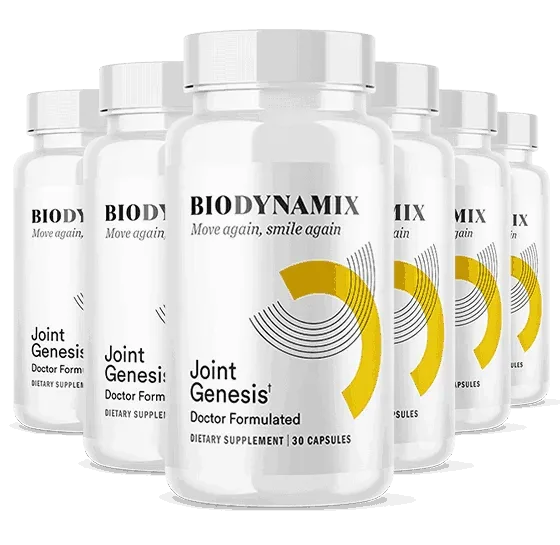
Don't wait until the problem gets worse. Our top-rated joint supplement uses clinically-studied Mobilee® to restore synovial fluid naturally.
Read Our Full Joint Genesis Review →180-Day Guarantee — Science-Backed — Doctor Formulated
The Japanese Village That Changed Joint Science
In the 1990s, a group of researchers visited Yuzurihara — a rural farming village about 160 kilometres from Tokyo. What they found there was scientifically baffling.
The elderly residents of Yuzurihara — people in their 70s, 80s, and 90s — were remarkably physically active. They farmed steep hillside plots, squatted to harvest crops, and moved with a flexibility that Western medicine associated with people decades younger. Joint complaints, which are epidemic among the elderly in Western countries, were virtually absent.
After extensive dietary analysis, researchers identified a striking difference: the traditional Yuzurihara diet was extraordinarily high in foods that stimulate hyaluronan production — particularly starchy root vegetables like satoimo (taro), fermented soy products, and specific mountain vegetables. The local population was essentially eating a diet that continuously fed their synovial fluid.
This research eventually caught the attention of Ivy League scientists studying joint biology, and it became one of the foundational observations behind the development of hyaluronan-based joint supplements — including the Mobilee® compound now used in products like Joint Genesis.
Joint flexibility in old age is not purely genetic luck. The Yuzurihara population suggests that what you consistently put into your body — and what it does to your synovial fluid — plays a far larger role than most Western medicine acknowledges.
7 Signs Your Synovial Fluid May Be Thinning
Because synovial fluid decline is gradual, most people adapt to the changes without realising what is happening. These are the most common signals worth paying attention to:
- Morning stiffness lasting more than 10–15 minutes — joints that need to “warm up” before moving freely are often under-lubricated.
- Clicking, grinding, or crepitus sounds — the crackling sensation when bending knees or hips is often bone surfaces with insufficient fluid cushioning.
- Reduced range of motion — difficulty fully extending or bending a joint, particularly knees, hips, or shoulders.
- Aching after inactivity — joints that stiffen up after sitting for an hour or sleeping are showing signs of poor fluid circulation.
- Swelling that comes and goes — the joint capsule can become inflamed as thin fluid fails to buffer mechanical stress adequately.
- Increased soreness after activity — a longer recovery window after exercise, walking, or physical work that was previously manageable.
- The feeling of “bone on bone” — a grinding sensation with weight-bearing movement, particularly in the knees.
Important: These symptoms can also indicate other conditions including osteoarthritis, bursitis, or tendonitis. If you experience joint pain, always consult a qualified healthcare professional for an accurate diagnosis before starting any supplement or treatment.
What Can Actually Restore Synovial Fluid?
The question most people arrive at eventually is: once synovial fluid has thinned, can you get it back? The honest answer is: partially, yes — and the approach matters enormously.
Movement First
Synovial fluid circulates through joint compression and release — meaning movement itself stimulates fluid production and distribution. Gentle, regular movement (walking, swimming, cycling) is the single most evidence-backed thing you can do for joint fluid health. Complete rest is often counterproductive.
Anti-Inflammatory Diet
Since inflammation accelerates hyaluronan breakdown, reducing systemic inflammation through diet directly protects synovial fluid. Foods high in omega-3 fatty acids, polyphenols, and antioxidants all contribute. Excess sugar, processed foods, and trans fats accelerate the damage.
Targeted Supplementation
Standard glucosamine and chondroitin supplements have been used for decades with mixed results in clinical trials. The more recent development of high-molecular-weight hyaluronic acid supplements — particularly patented compounds like Mobilee® — has shown more consistent results in multiple double-blind trials specifically because they target the synovial fluid molecule directly rather than providing general joint building blocks.
Mobilee® in particular has been shown in 14 clinical trials to stimulate the synoviocyte cells to produce more hyaluronan endogenously — meaning it helps the joint make more of its own fluid, rather than just supplementing externally.
Medical Options
For more severe cases, doctors may recommend viscosupplementation — direct injection of hyaluronic acid into the joint. This is effective but invasive, expensive, and typically requires repeat procedures. It is not practical as a long-term daily solution for most people.
Interested in Synovial Fluid Supplementation?
We reviewed Joint Genesis — one of the only supplements built around Mobilee®, the clinically-studied hyaluronic acid matrix. Read our full breakdown before deciding.
Read Our Joint Genesis Review →Editorial review. Affiliate link. No medical advice.
Ready to Restore Your Joint Health?
Joint Genesis is the only supplement built around Mobilee® — clinically studied for its potential to support synovial fluid quality. Read our evidence-based review before deciding.
Start Your 180-Day Risk-Free Trial ?180-Day Money-Back Guarantee — Free Shipping — No-Risk Trial